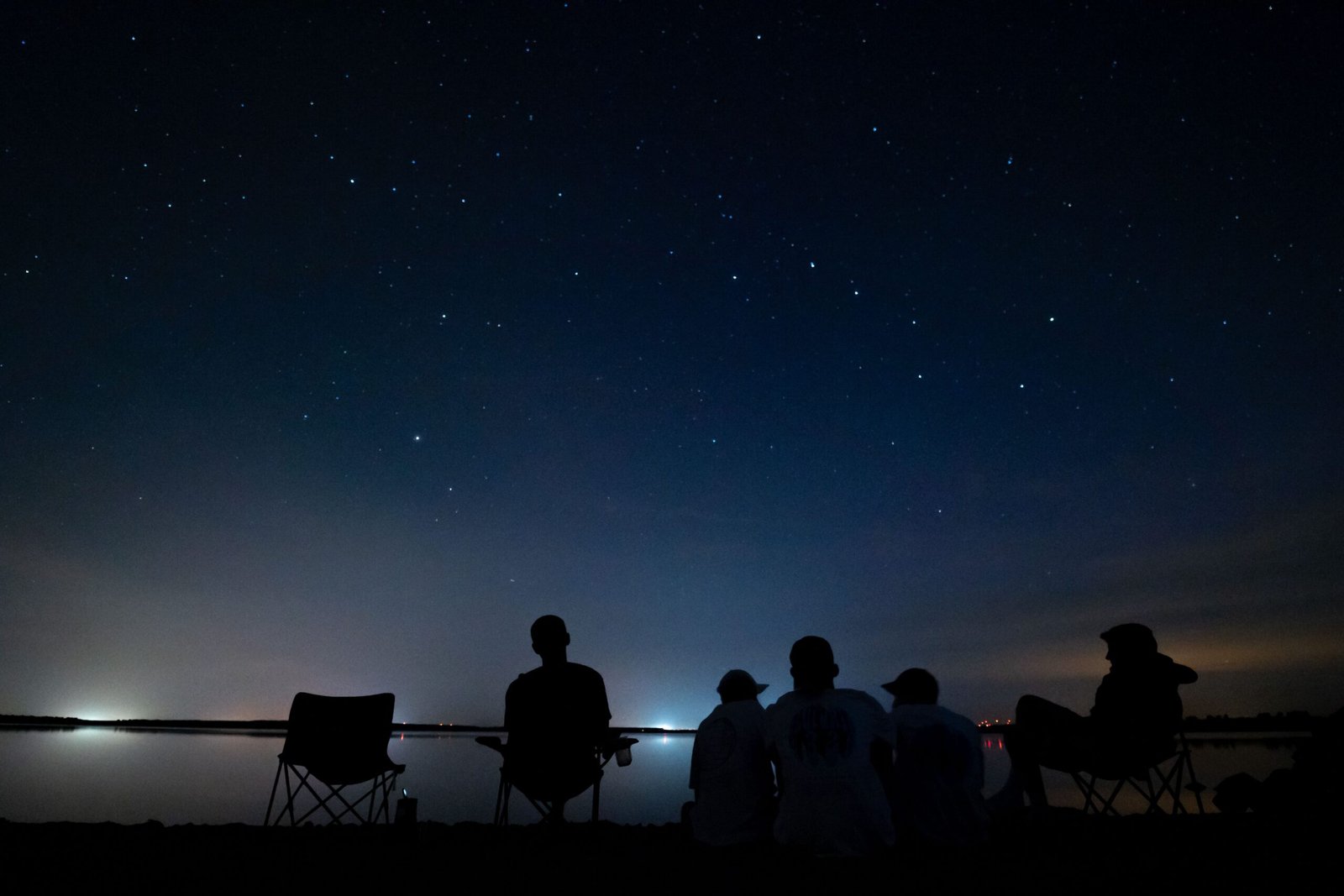
You do not need a telescope, a degree in astrophysics or a cloudless sky to enjoy stargazing. All you really need is a clear-ish night, a willingness to look up and a little patience while your eyes adjust to the dark.
Stargazing in the UK is one of those hobbies that costs almost nothing, requires no equipment to start and can be done from your back garden. Here is everything you need to know to get started.
The UK has distinct stargazing seasons, and each one brings different constellations and celestial events into view.
Winter (December to February) is widely considered the best season for stargazing in the UK. The nights are longest, the air tends to be clearer and some of the most spectacular constellations — Orion, Taurus and Gemini — dominate the sky. The Geminid meteor shower in mid-December is one of the year’s highlights.
Spring (March to May) brings the transition from winter to summer constellations. Leo becomes prominent, and the galaxies of the Virgo Cluster are visible through binoculars or a small telescope. The Lyrid meteor shower in April offers a reliable show.
Summer (June to August) has the shortest nights but also the warmest stargazing conditions. The Summer Triangle — formed by the bright stars Vega, Deneb and Altair — is the season’s signature feature. The Perseid meteor shower in August is one of the most popular stargazing events of the year.
Autumn (September to November) brings lengthening nights and the return of darker skies. The Andromeda Galaxy becomes visible to the naked eye under good conditions, and the Pleiades star cluster rises in the east, signalling the approach of winter.
Light pollution is the stargazer’s biggest enemy. Getting away from city lights makes a dramatic difference to what you can see. The UK has several designated Dark Sky areas that offer outstanding viewing conditions.
Northumberland International Dark Sky Park is one of the largest areas of protected dark sky in Europe. Located near Kielder Water, it offers some of the darkest skies in England.
Exmoor National Park in Devon and Somerset was the first International Dark Sky Reserve in Europe. Its coastal location means less atmospheric interference and stunning views.
Snowdonia National Park in North Wales offers dark skies combined with dramatic mountain scenery. Several locations within the park have been designated as Dark Sky Discovery Sites.
The Scottish Highlands offer some of the darkest skies in the UK, particularly in remote areas like Galloway Forest Park, which holds Dark Sky Park status.
You do not have to travel far, though. Even suburban gardens can reveal the brightest stars and planets on a clear night. The key is to find the darkest spot you can, let your eyes adapt for at least twenty minutes and look up.
You might be surprised by how much is visible without any equipment at all. On a clear night away from light pollution, the naked eye can see around two to three thousand stars, along with the Milky Way band stretching across the sky.
Major constellations like Orion, the Plough (part of Ursa Major), Cassiopeia and Leo are all easy to spot once you know where to look. The planets Venus, Jupiter, Mars and Saturn are visible at various times of year and appear as bright, steady points of light compared to the twinkling of stars.
Meteor showers, the International Space Station and even the occasional aurora borealis (northern lights) visible from Scotland and northern England add excitement to regular stargazing sessions.
Give your eyes time to adjust. It takes around twenty minutes for your eyes to fully adapt to the dark. Avoid looking at your phone screen during this time — if you need light, use a red torch or switch your phone to a red filter mode.
Dress warmer than you think you need to. Standing still in the dark gets cold quickly, even in summer. Layers, a hat and a flask of something warm make a big difference to how long you stay out.
Start with the easy targets. The Plough is one of the easiest star patterns to find in the UK sky and it acts as a pointer to Polaris, the North Star. Once you can find Polaris, you can orient yourself to find other constellations.
Use a star map or app. A planisphere (a rotating star chart) or a free smartphone app can help you identify what you are looking at. For a personalised reference, you can create a custom star map showing the sky from your location on any given night.
You do not need to buy a telescope to start stargazing. In fact, many experienced astronomers recommend starting with just your eyes and a good pair of binoculars.
A pair of 10×50 binoculars opens up a new world of detail. You can see the craters on the Moon, the moons of Jupiter, star clusters like the Pleiades and the hazy glow of distant galaxies. They are portable, affordable and far easier to use than a telescope.
When you are ready to invest in a telescope, a Dobsonian reflector offers the best value for beginners. It is simple to set up, easy to use and provides excellent views of the Moon, planets and deep-sky objects.
Whether you have been stargazing for years or you are just getting started, there is something magical about seeing the night sky laid out before you. If you want to capture a special night — the first time you went stargazing, a memorable holiday under the stars or simply tonight’s sky — you can turn it into a personalised print.
Create your own star map with Your Night Sky and bring the stars indoors. Choose the date, location and time of your most memorable stargazing moment and design a print that captures it forever.

Contributor at Your Night Sky. We create personalised star maps that capture the night sky exactly as it appeared on your most meaningful moments.
